Struggling to choose between a townhome and a single-family home in Playa Vista? You’re not alone. The community’s modern design, walkable amenities, and strong job base create great options in both categories, which makes the decision feel high stakes. In this guide, you’ll learn how privacy, outdoor space, HOA scope, maintenance, parking, financing, and resale differ in Playa Vista specifically, plus a practical checklist to help you decide with confidence. Let’s dive in.
Playa Vista at a glance
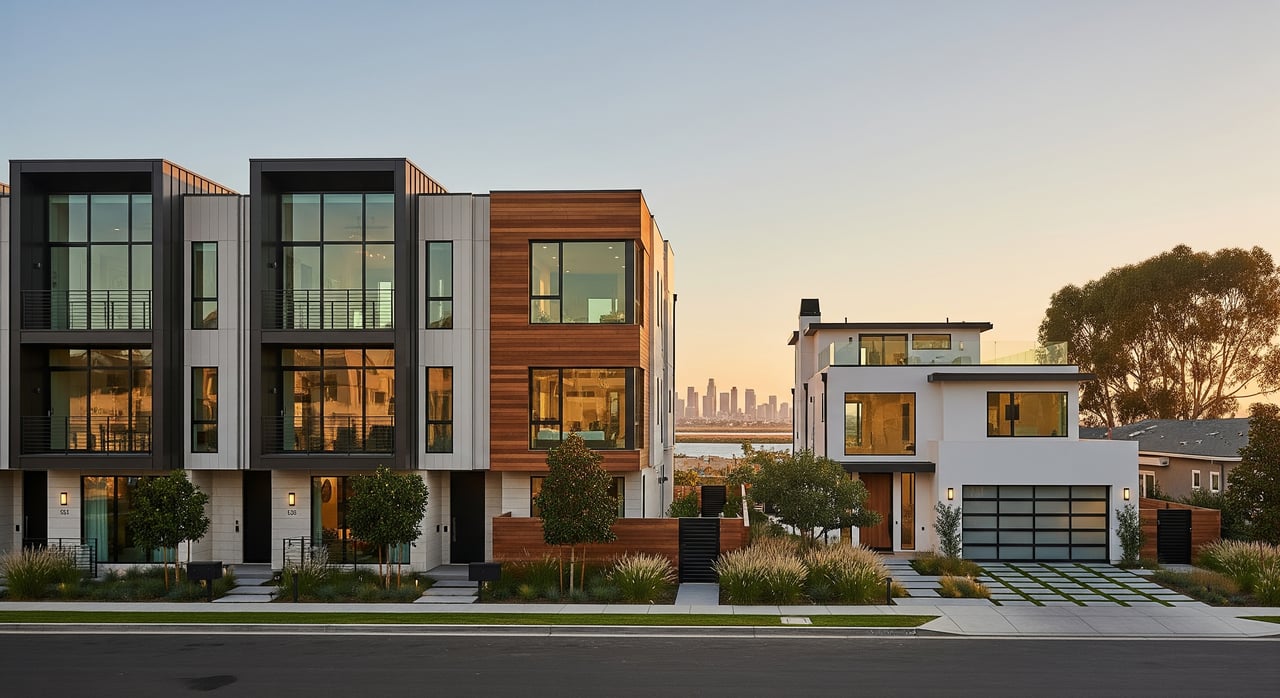
Playa Vista is a master-planned, mixed-use Westside community built largely in the 2000s and 2010s on the former Howard Hughes airfield. Housing blends townhomes, condos, lofts, and small-lot detached homes, with traditional large-lot single-family houses uncommon inside the plan. Buyers are drawn by proximity to tech and media employers, walkability to parks and the Runway retail center, and a low-maintenance lifestyle supported by community amenities.
Townhome vs single-family: what actually changes
Privacy and noise
Townhomes share at least one wall, so auditory privacy is typically lower than in detached homes. Newer construction may include sound-rated materials, but you should still verify party-wall details during inspection. Detached homes offer more separation from neighbors and fewer shared surfaces, though lots are modest compared with traditional LA neighborhoods.
Outdoor space and yard use
Townhomes often trade large yards for patios, balconies, or rooftop decks. These are great for small gatherings and low-maintenance living but offer limited ground-level play areas. Detached homes usually include a larger fenced yard by Playa Vista standards, which helps with pets, gardening, and storage, subject to any HOA and local rules.
HOA scope and rules
Many Playa Vista properties fall under one or more HOAs. Townhome associations commonly cover building exteriors, common landscaping, and amenities such as pools or gyms. Detached homes may be in a smaller HOA or just the master community, where dues typically support shared areas and community features. Always review CC&Rs, budgets, reserve studies, insurance certificates, meeting minutes, and any current or pending assessments.
Maintenance and lifecycle costs
Townhome owners benefit from centralized exterior maintenance, which shifts costs into predictable monthly dues. Interiors remain the owner’s responsibility, and the health of the HOA reserves matters a lot. Detached owners handle roof, exterior paint, fences, and landscaping directly, which can mean variable costs but more control over timing and contractors.
Parking and guest access
Both product types often include garages, but guest parking is a key constraint in Playa Vista. On-street parking can be restricted, and some micro-neighborhoods require guest permits or limit overnight parking. If you have multiple cars or frequent visitors, confirm the exact number and location of assigned spaces and the HOA’s guest rules before you write an offer.
Financing and insurance
Townhomes and condos can require lender project approval, including a review of HOA financials, reserves, insurance, and the percentage of rentals. Healthy and professionally managed associations tend to simplify financing. Insurance differs by product type too. Townhome owners usually pair the HOA’s master policy with an HO-6 policy for interiors and personal property. Detached homeowners typically carry broader HO-3 or HO-5 coverage for the structure and contents, and many buyers consider earthquake coverage.
Taxes and recurring costs
Los Angeles County property taxes are based on assessed value and can include local parcel taxes or special assessments in some subdivisions. In Playa Vista, your total monthly number should combine mortgage, property taxes, insurance, and HOA dues. Townhomes may come with lower purchase prices but higher dues, while detached homes can have higher purchase prices and more variable maintenance costs.
Resale and rental demand
Demand is supported by local jobs, walkability, and modern construction. Townhomes often appeal to first-time luxury buyers, downsizers, and investors seeking low-maintenance living. Detached homes are scarcer in Playa Vista and can command a premium from buyers who want more privacy and yard space. Liquidity can be strong across both categories when HOA project health and financing pathways are clear.
Micro-neighborhood factors that matter
Proximity to parks, the Runway retail center, and office campuses influences noise, walkability, and day-to-day convenience. Homes near retail and offices may see more foot traffic, which some buyers love for access and others avoid for privacy. For townhomes, orientation and level matter. Units facing parks or with rooftop decks can earn premiums for outdoor space and views, while ground-level locations near common paths may feel less private. Newer complexes often feature better insulation and contemporary systems, sometimes alongside higher dues for enhanced amenities.
Due-diligence checklist for Playa Vista buyers
Property-level checks
- Confirm legal classification on title and CC&Rs: detached single-family vs townhome or condo-townhome.
- Obtain the full HOA packet if applicable: CC&Rs, bylaws, rules, budgets, financials for the last two years, reserve study, master insurance certificate with deductibles, and recent meeting minutes.
- Verify who maintains roofs, exterior paint, fences, landscaping, and HVAC systems.
- Inspect assigned parking, guest parking policies, overnight rules, and any EV charging restrictions.
Financing and title
- Ask your lender about project approval for townhomes or condos and whether a conventional loan is available.
- Review title for easements, special taxes such as Mello-Roos, and any encumbrances.
- Check the parcel tax roll and assessor notes for recurring charges.
Physical condition and risk
- Order a full home inspection, and for attached product, focus on party walls, roof access, deck waterproofing, and drainage.
- Review seismic retrofit status where applicable and check flood maps for low-lying areas.
- Ask about historical site issues that could affect landscaping or exterior changes.
Lifestyle rules and usage
- Confirm policies on pets, rentals and minimum lease terms, exterior modifications, holiday decor, and business use.
- Verify access rights and any fees for community amenities like pools, gyms, and parks.
Decision checklist: narrow your choice fast
Lifestyle priorities
- Need a private yard for kids or pets and more separation from neighbors - lean detached.
- Want a walkable, low-maintenance lifestyle with amenities like a pool or gym - lean townhome.
- Host frequent guests or have multiple vehicles - confirm parking capacity early, with a slight edge to detached.
- Sensitive to noise - lean detached or target end-unit townhomes with sound-rated party walls and calmer orientations.
Financial and ownership tolerance
- Comfortable with monthly dues and the possibility of special assessments in exchange for simplified upkeep - townhome.
- Prefer control over maintenance timing, materials, and contractors - detached.
- Want financing with fewer project-level hurdles - detached typically offers a simpler path.
Resale horizon and exit strategy
- Planning a 3 to 7 year hold with flexibility to rent or sell into the local job market - both can work.
- Prioritizing long-term scarcity value inside Playa Vista - detached may offer stronger upside.
Practical checklist when touring
- Request the HOA packet early and review reserves, insurance, and meeting minutes.
- Walk the block at different times to gauge noise and parking.
- Confirm the exact number and location of spaces and guest rules.
- Inspect shared elements like party walls, rooflines, and deck waterproofing.
- Read CC&Rs for pets, rentals, ADUs, and exterior customization.
Scenarios to help you choose
You might love a townhome if
- You want newer construction with low exterior maintenance.
- You value amenity access and a lock-and-leave lifestyle.
- Your outdoor needs fit patios, balconies, or a rooftop deck.
- You’re comfortable with dues and clear HOA rules.
A small-lot detached may fit if
- You want more privacy, yard use, and pet-friendly space.
- You prefer control over upgrades and maintenance.
- You host often and need more private parking.
- You plan to hold long term and value scarcity.
Next steps
- Pull current comps for both product types and compare total monthly costs including HOA dues.
- Request the HOA packet before or right after your offer and review reserves, insurance, and any assessments.
- Run title and tax checks for special assessments.
- Schedule a detailed inspection focused on shared elements and waterproofing where relevant.
- If buying attached, confirm project approval with your lender and understand any conditions.
If you want hyper-local guidance on specific Playa Vista micro-neighborhoods and a side-by-side comparison of live listings that match your lifestyle and budget, reach out. We’ll help you choose with clarity and negotiate with confidence. Connect with Robin Zacha to get started.
FAQs
What costs should I compare between Playa Vista townhomes and detached homes?
- Compare mortgage, property taxes, insurance type and coverage, HOA dues, and expected maintenance so you understand your true monthly number.
How do HOAs affect financing for Playa Vista townhomes or condos?
- Lenders may require project approval and will review HOA financials, reserves, insurance, and rental ratios, which can shape your loan options and timeline.
Are townhomes noisier than detached homes in Playa Vista?
- Townhomes share walls and can have more ambient noise, so prioritize end units, sound-rated construction, and calmer orientations if you’re sensitive.
Can I add an ADU to a Playa Vista property?
- ADU feasibility depends on state and city rules plus CC&Rs, so review the HOA’s architectural guidelines before assuming an addition is allowed.
What should I know about parking and guests in Playa Vista?
- Confirm your assigned spaces, any permit requirements, and overnight limits since on-street parking can be restricted inside the community.
Why are HOA reserves and special assessments so important here?
- Reserves fund major repairs in attached projects, and low reserves can lead to special assessments that increase your costs unexpectedly.