If you are thinking about buying an income property in Culver City, the biggest challenge is not finding renter demand. It is making sure the numbers, zoning, and local rules all work together before you buy. In a high-cost market like Culver City, small mistakes can get expensive fast, so it helps to know where the opportunities are and where the compliance issues can show up. This guide will walk you through the basics of what to look for, what to verify, and how to think like a practical small investor. Let’s dive in.
Why Culver City Gets Investor Attention
Culver City draws interest from small investors because it combines strong renter appeal with a location many tenants already know and want to access. Zillow reported an average home value of $1,314,904 as of April 30, 2026, along with an average rent of $3,100 and 192 available rentals as of May 16, 2026.
That same Zillow data describes the rental market as warm, and homes go pending in about 17 days. In plain terms, you are looking at a market where purchase prices are high, but renter demand and competition remain meaningful.
Transit also supports demand. Culver CityBus operates seven regular routes and one bus rapid transit route and serves about 5 million passengers each year, while the Culver City Metro Station connects to the E Line and local bus service.
For a small investor, that matters because convenience often supports leasing strength. Properties that help reduce commute friction can appeal to tenants who want access to work, school, shopping, and other daily destinations without adding another layer of hassle.
What Small Investors Should Understand First
Culver City is not usually a market where you can buy any property and expect an easy value-add story. The stronger play is often buying a property with a layout, legal unit count, and renovation path that already make sense for long-term tenants.
That is especially important because tenant expectations tend to be high in this part of the Westside. Rent levels can support solid income, but the entry price means you need to be disciplined about your acquisition criteria.
Bedroom count is one good example. Zillow’s local rental data shows meaningful rent differences by unit size, with three-bedroom units averaging around $5,000, so layout can matter just as much as total square footage.
Property Types That Can Fit a Small Investor Strategy
Duplexes and small multifamily
Culver City’s zoning code gives small investors a few practical lanes to consider. The R2 district is defined as a two-family residential district characterized by single-family dwellings and duplexes.
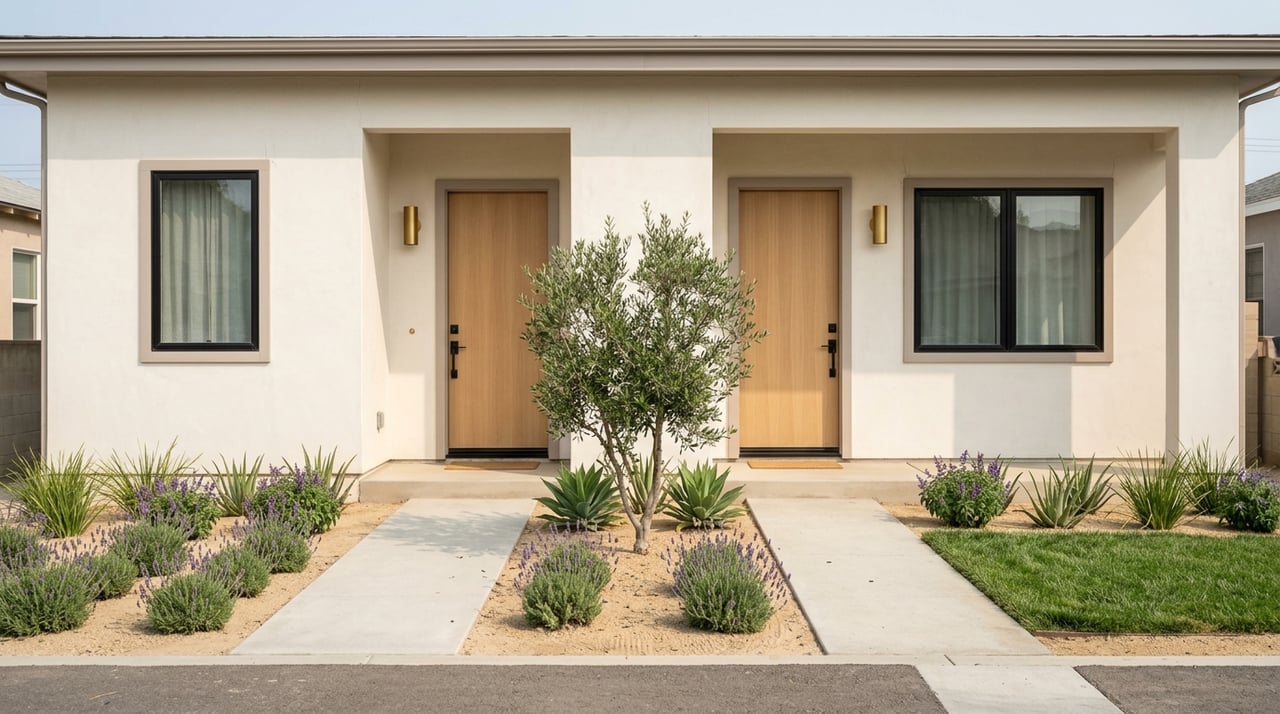
The code also defines a duplex as one structure on a single lot containing two functionally separate dwelling units. If you are looking for simple income-property formats, that makes duplexes an important category to watch.
For investors who want slightly more scale, the RLD district is defined as low-density multifamily housing characterized by triplexes, fourplexes, townhouses, and similar buildings. These properties can offer more doors, but they also bring more operating and compliance complexity.
Single-family homes with ADU potential
A single-family home can also be part of an income strategy if the lot and zoning support an ADU or JADU plan. Culver City allows ADUs in both single-family and multiple-family zones, and they may be within, attached to, or detached from the primary dwelling.
The city also states that parking is not required for ADUs. Another notable point for investors is that owner occupancy is not required for ADUs, though JADUs have their own owner-occupancy rule.
That can make a single-family purchase with ADU potential a realistic path for a small investor who wants rental income without taking on a larger multifamily building. Still, you should verify the exact permit path, existing improvements, and legal use before you underwrite the deal.
Long-term rentals are the clearer play
For many investors, the cleaner strategy in Culver City is long-term rental housing. The zoning code says ADUs and JADUs may not be used for rentals of 30 days or less unless otherwise established under state law.
That means the more dependable model is usually a standard long-term rental setup. If your plan depends on short-term turnover or vacation-style occupancy, you need to be very careful about assuming that use will work.
Rent Rules Matter More Here
Know which units may be covered
One of the most important parts of buying an income property in Culver City is understanding the city’s local rent rules before you close. Culver City’s permanent rent control and tenant protection ordinances took effect on October 30, 2020, and clarifying amendments took effect on February 11, 2026.
The rent stabilization ordinance applies to parcels with two or more rental units built on or before February 1, 1995. Culver City says single-family homes, townhomes, and condos are exempt from rent stabilization, though the city’s tenant protections ordinance still covers many units.
The city also notes that it administers its own program rather than AB 1482. For a buyer, that means local rules are not a side issue. They are part of the core underwriting process.
Understand rent increase limits
For covered units, annual rent increases are capped using a CPI-based formula. The cap was 3.25% for rent increases effective from April 1 through June 30, 2026.
The city also says landlords may not impose more than one increase in a 12-month period unless approved for a rent adjustment. If you are projecting future income growth, those rules need to be part of your assumptions from day one.
Registration is not optional
Culver City requires all rental units to be registered annually by July 31, with a grace period through August 31. As of July 1, 2025, the annual registration fee is $172.17 per residential rental unit, and the change-in-ownership fee is $15 per property.
Registration must also be updated with a new tenancy and when housing services change. When you are reviewing a target property, ask whether the unit registration is current and whether there are any gaps that need to be fixed after closing.
Renovation Plans Need Extra Care
Permits affect your budget and timeline
If your investment strategy includes improvements, build permit timing and scope into your budget early. Culver City requires permits for new residential construction, additions and remodels, ADUs, re-roofs, tenant improvements, and mechanical, electrical, and plumbing work.
The city uses an online permit portal through its Building Safety Division. That is helpful, but it does not eliminate plan check time, permit fees, or inspection sequencing, all of which can affect your hold period and cash needs.
Verify zoning before assuming upside
The Planning and Development Department handles land use development, Current Planning maintains and implements the zoning ordinance, and Building Safety handles permits, inspections, and code enforcement. That division of responsibilities is a good reminder that value-add assumptions should be tested early.
Before you count on adding a unit, reconfiguring bedrooms, or converting space, confirm the zoning district, setbacks, legal unit count, and permit path. In a market this expensive, the details can make or break the deal.
A Smart Due Diligence Checklist
A practical way to evaluate a small Culver City income property is to keep your review process simple and disciplined. The goal is to confirm that the property works not just on paper, but also under local rules.
Start with this sequence:
- Confirm the zoning district
- Confirm whether the property is covered by local rent stabilization or tenant protection rules
- Verify whether the rental units are already registered with the city
- Estimate permit scope for any planned improvements
- Review whether the existing layout supports your intended tenant profile
This order matters because it keeps you from getting excited about projected rent before you know what the property can legally support. It also helps you focus on the kind of value creation that fits Culver City best.
What Often Makes a Better Buy
In Culver City, the better small-investor opportunity is often not the property with the most dramatic hypothetical upside. It is the one with a clear legal setup, a practical renovation path, and a layout that matches actual renter demand.
That might mean a duplex with strong unit separation, a low-density multifamily property with a manageable operations profile, or a single-family home with realistic ADU potential. In each case, the appeal comes from reducing surprises while creating income that fits the market.
From our perspective on the Westside, that is where local knowledge really helps. When you understand neighborhood context, renovation workflow, and how city rules affect your timeline, you can make better decisions before you commit capital.
If you are exploring Culver City income properties and want a grounded read on the opportunity, zoning questions, or renovation potential, connect with Robin Zacha for practical Westside guidance.
FAQs
What makes Culver City income properties attractive to small investors?
- Culver City offers strong renter demand, transit access, and rent levels that can support income, but it is also a high-cost market where zoning, rent rules, and permit issues need close review.
What property types can small investors buy in Culver City?
- Common small-investor options include duplexes, low-density multifamily properties like triplexes and fourplexes, and single-family homes with ADU potential if the zoning and permit path support that use.
What should buyers know about ADUs in Culver City income properties?
- Culver City allows ADUs in single-family and multiple-family zones, parking is not required, and owner occupancy is not required for ADUs, but ADUs and JADUs generally may not be rented for 30 days or less.
What rent control rules apply to Culver City income properties?
- Culver City’s rent stabilization ordinance applies to parcels with two or more rental units built on or before February 1, 1995, while single-family homes, townhomes, and condos are exempt from rent stabilization, though tenant protections may still apply.
What fees and registration rules apply to Culver City rental properties?
- All rental units must be registered annually with the city, and as of July 1, 2025, the annual registration fee is $172.17 per residential rental unit, plus a $15 change-in-ownership fee per property.
What should you verify before buying a Culver City income property?
- You should confirm zoning, rent-rule coverage, registration status, permit scope for any upgrades, and whether the layout matches the kind of long-term tenant you want to attract.