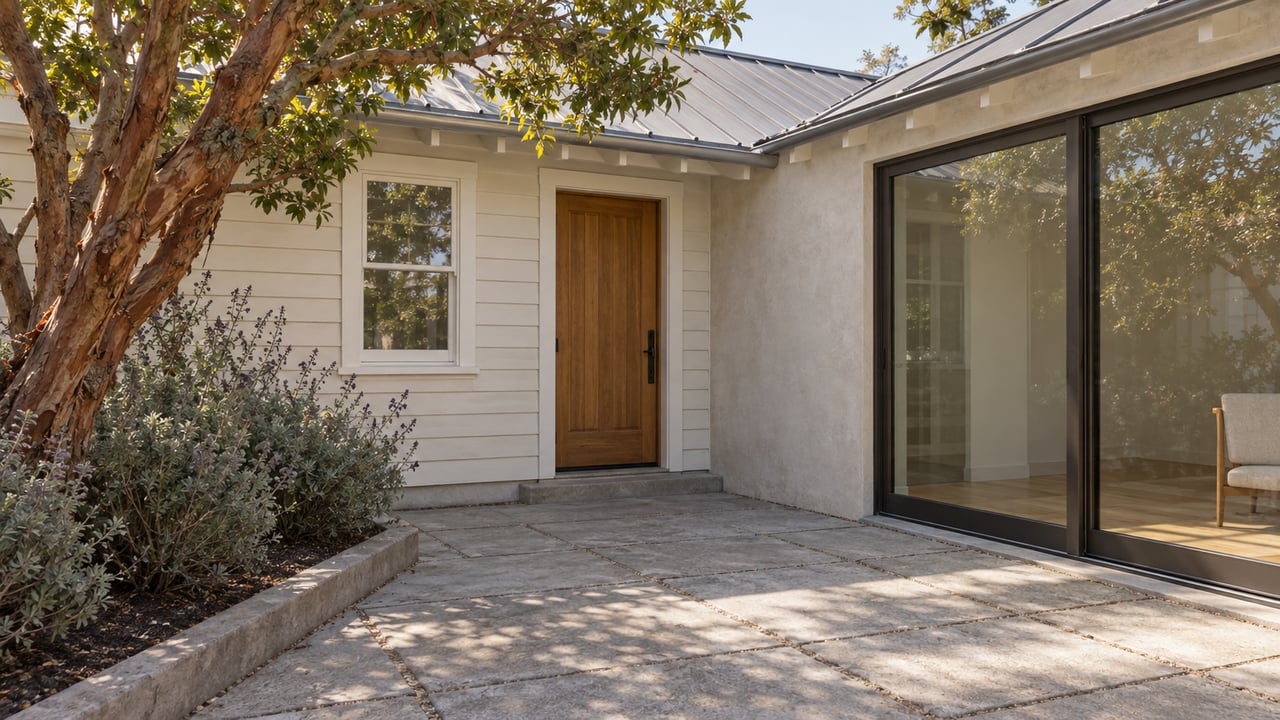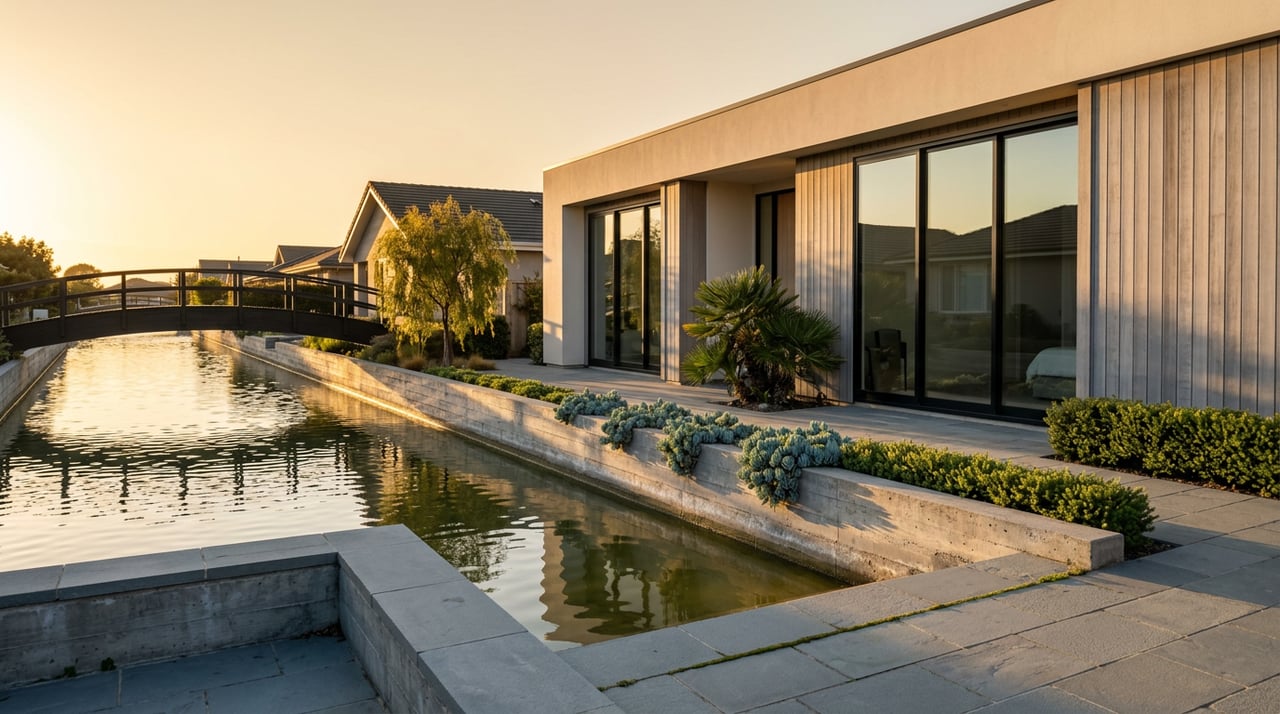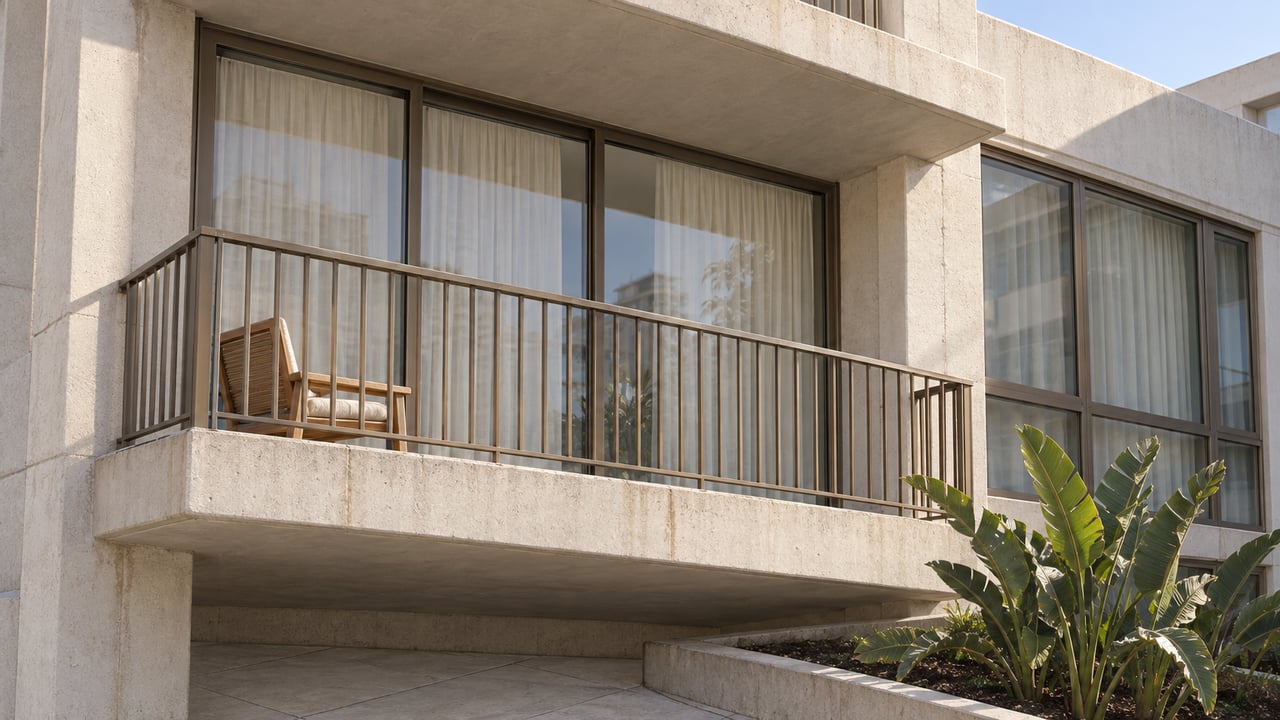
In September, the Promenade at Marina City Club sold for $24.8 million, the first time that piece of the complex had changed hands in more than two decades. On paper it reads like a straightforward trophy transaction on the water, as Hoodline reported. The number that actually matters to anyone shopping Marina del Rey right now isn't the sale price. It's the other figure sitting in the same lease file: 41 years remaining on the ground lease the entire complex sits on.
Price versus lease term is the distinction the portals don't surface, and it's the one that decides what a Marina del Rey listing is actually worth to you.
The Only Condos in the Marina Built on Someone Else's Land
Most of Marina del Rey sits on land the County of Los Angeles owns outright and leases to private operators, a structure that dates back to when the county funded the harbor's original construction and kept title to the waterfront in exchange. Nearly every residential ground lease in the marina operates strictly as rental apartments. Marina City Club is the one exception.
Developer J.H. Snyder Co. bought the master lease in 1986 from a subsidiary of Hughes Aircraft and converted 600 apartment units into condominium leaseholds, negotiating a 39-year extension with the county that pushed the lease's expiration from 2028 out to July 2067. That's the deal every owner in the complex is still living inside. Because of how California's Subdivision Map Act treats leased land, what you buy at Marina City Club is technically a prepaid subleasehold interest, not a fee-simple condominium. You own the right to occupy the unit for the remaining term of that lease. You don't own the ground under it. You can see the underlying agreements yourself in the county's Marina del Rey lease agreements archive.
Forty-One Years Sounds Like Plenty, Until You Run a Standard Loan Against It
Forty-one years feels comfortable on its face. It stops feeling comfortable once you put a conventional 30-year mortgage against it.
Fannie Mae's standard underwriting rule for leasehold financing requires the ground lease to run at least five years past the mortgage's maturity date. A 30-year loan originated today needs the lease to still be active in the mid-2050s, which it will be. But that buffer shrinks with every year that passes, and it doesn't shrink gradually toward 2067. It hits a real wall well before that: once a loan's origination year plus 30 years plus the five-year buffer crosses the 2067 expiration, a standard 30-year conventional loan on a Marina City Club unit stops qualifying under Fannie Mae's rule as it exists today. Based on the current lease term, that arithmetic starts to fail sometime in the early 2030s, not in 2067. The complex's lease has already been extended once, back in 1986, so another renegotiation before then isn't out of the question. But absent one, that's the real countdown clock a buyer is financing against, not the date printed in the county file.
That's the friction worth understanding well before it becomes a problem at the closing table. The pool of buyers who can get standard 30-year financing on that property doesn't disappear the year the lease runs out. It starts narrowing years earlier, as fewer loan terms pencil against the shrinking window, pushing later buyers toward shorter amortization schedules, larger down payments, or portfolio lenders who underwrite leaseholds by hand. None of that shows up in a listing price. It shows up in who can actually finance the purchase, and that changes the buyer pool long before the calendar does.
The County Is Already Spending to Keep the Clock Running Smoothly
None of this means the county or the property's operator are letting the lease coast to its expiration untouched. In late 2023, the county reached an agreement with Essex Marina City Club L.P. that approved $1.68 million in annual rent credits, money redirected to help fund a reserve for infrastructure repairs across the complex's three towers and low-rise buildings, some of which date to the late 1960s and 1970s. The county's Small Craft Harbor Commission formally endorsed the related rent schedule amendment in February 2024.
That's a meaningful signal for anyone weighing a purchase there. The county and the operator are actively funding capital repairs on a building whose ground lease has a known end date, which suggests both sides expect the relationship to continue well past any near-term uncertainty. It doesn't erase the financing math above, but it does mean the physical building is being maintained with that math in mind, not despite it. Owners at the complex are also represented collectively through the Marina del Rey Lessees Association, formed in 1962 specifically to negotiate on behalf of the harbor's leaseholders, which is worth knowing if you're trying to track how future lease decisions get made.
The Tax Boundary That Skips Marina del Rey Entirely
There's a second structural quirk in Marina del Rey that has nothing to do with ground leases and everything to do with where the county line falls.
Marina del Rey is unincorporated Los Angeles County land, under direct county jurisdiction rather than the City of Los Angeles. Because of that, property sales there fall outside the reach of the city's Measure ULA transfer tax, which can levy up to 5.5 percent on sales above roughly $10.9 million within city limits. A few miles north, in neighborhoods that sit inside the city boundary, sellers crossing that threshold have to factor in what ULA takes off the top before their agent's commission even enters the math. In Marina del Rey, that calculation doesn't exist.
That exemption has helped keep institutional capital flowing into the harbor even as the broader Los Angeles apartment market has cooled elsewhere. Jackson Square Properties bought the 544-unit Shores for $170 million in a comparable recent trade. Carmel Partners paid $141 million, or $578,000 per unit, for the 244-unit Stella complex in October 2025, a decade-high per-unit benchmark for the neighborhood's residential trades. Not every trade has gone up. The 398-unit Next on Sixth, which sold for $189 million in 2019, changed hands again in June 2026 for just $139 million, a reminder that the ULA exemption is one input among several, not a guarantee of appreciation on its own.
Three Numbers, Three Different Medians, One Real Explanation
If you've compared Marina del Rey figures across sites recently, you've probably noticed they don't agree with each other.
| Source | What it reports | Time window |
|---|---|---|
| Redfin | $782,000 median sale price | Three months ending May 2026 |
| Zillow | $1,356,896 average home value (ZHVI) | As of July 2026 |
| Movoto | $1,280,000 median list price | September 2026 |
Redfin, Zillow, and Movoto aren't disagreeing about which way the market is moving. They're measuring different slices of a product line that spans studio-sized leasehold units at Marina City Club, high-rise fee-simple condos on Admiralty Way, and detached homes on the peninsula, all filed under the same neighborhood name. Redfin's figure came from just 12 recorded sales in May 2026, a small enough sample that a handful of leasehold transactions can pull the whole median down. Zillow's index averages a broader set of estimated values, which leans toward the higher fee-simple stock. Movoto's number reflects what's currently asking, not what's closing. None of them tell you whether the specific unit you're looking at carries a ground lease, and that single fact moves the real number more than any timing difference between the three sites.
What This Means If You're Comparing Marina del Rey to Somewhere Else
If you're cross-shopping Marina del Rey against Venice, Playa del Rey, or Culver City, the headline median is the least useful number on the page. What decides your actual net proceeds as a seller, or your actual financing options as a buyer, is whether the specific property sits on fee-simple land or a ground lease, how many years are left on that lease relative to the loan term you want, and whether the parcel falls inside or outside Los Angeles city limits for tax purposes. Two listings at the same asking price in the same zip code can carry entirely different math once you account for those three factors.
That kind of detail only shows up when you pull the actual lease file and the actual jurisdiction boundary for the parcel, not when you scroll past the median on a portal.
If you're weighing a purchase or sale in Marina del Rey and want the lease term, the financing math, and the tax jurisdiction laid out for your specific address before you write or accept an offer, reach out to Zacha Homes. Find out what your home is worth.