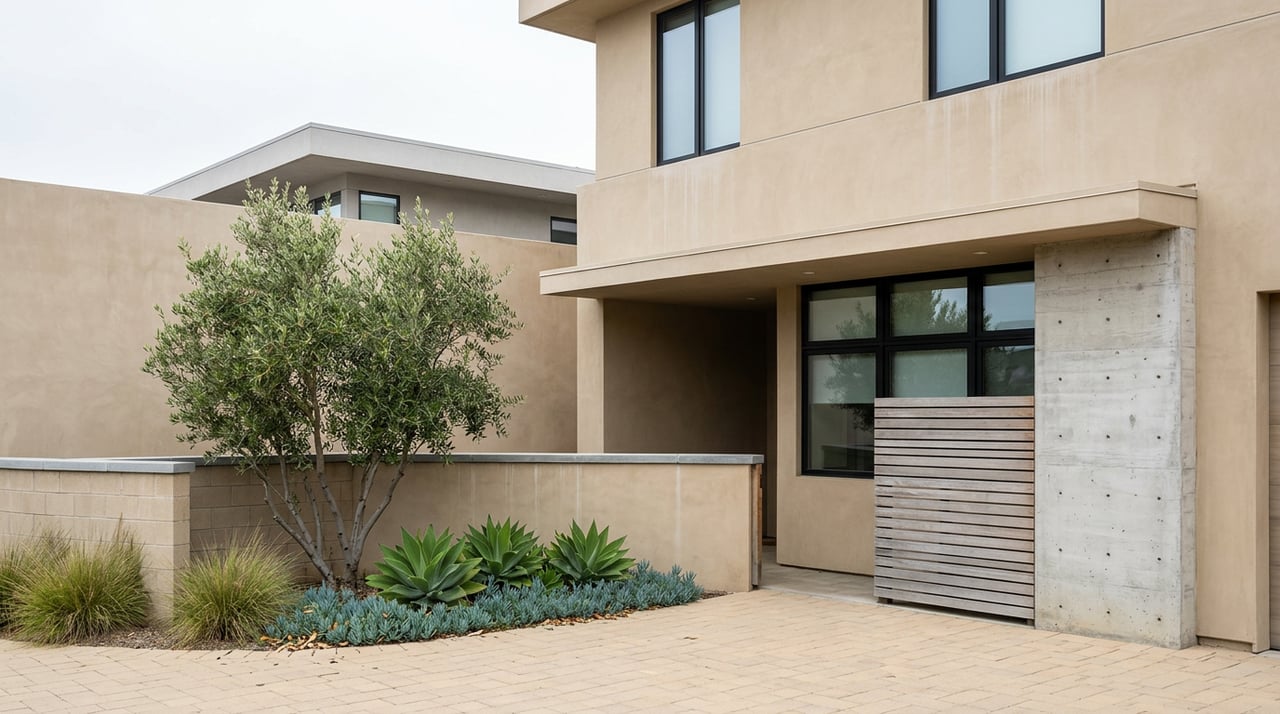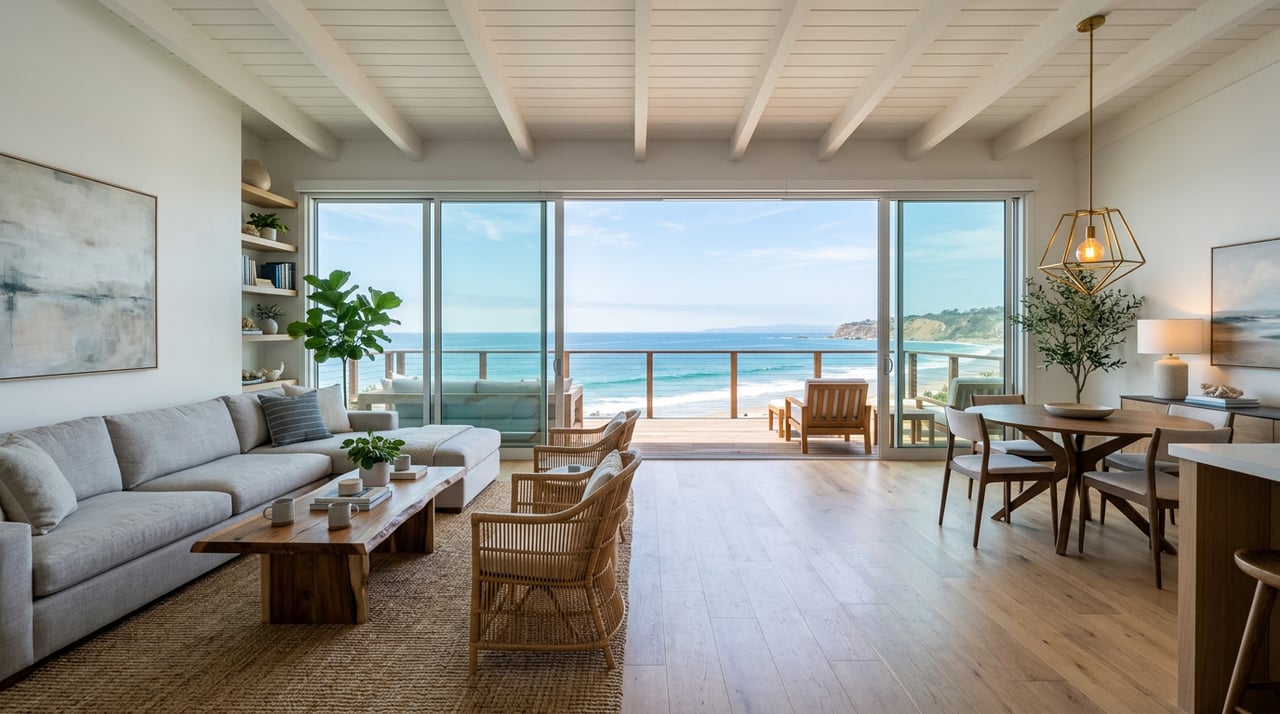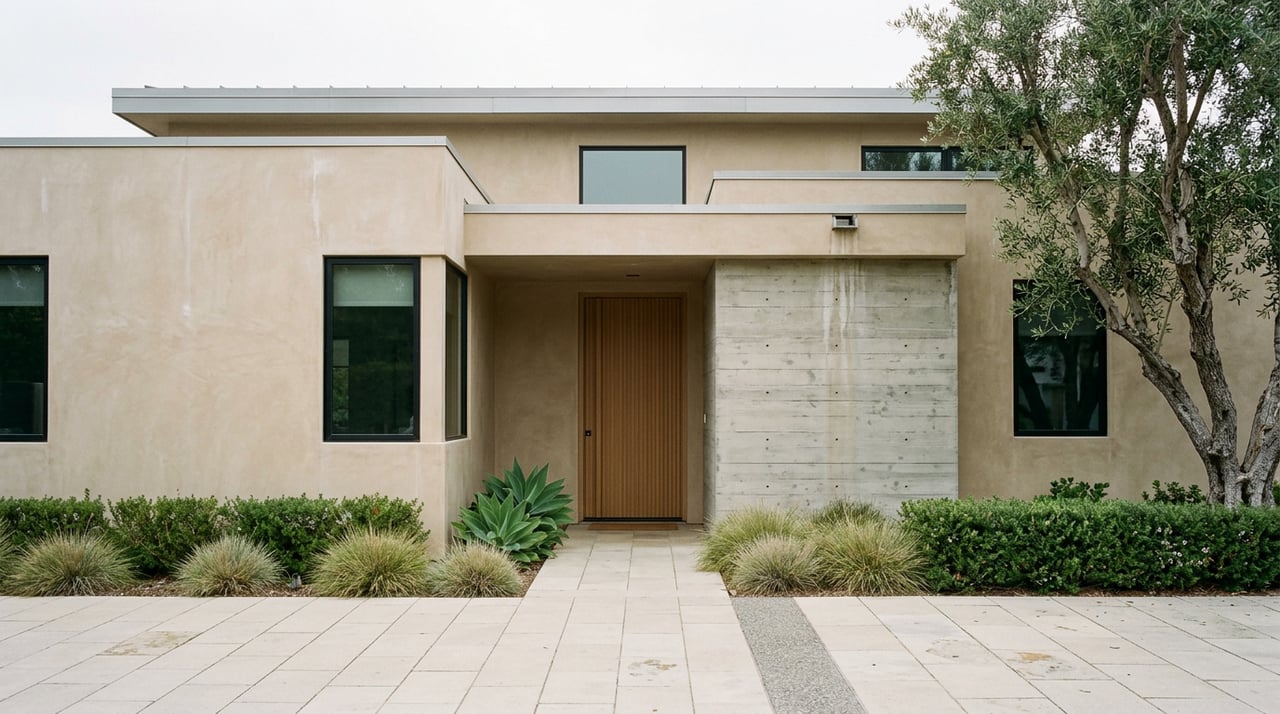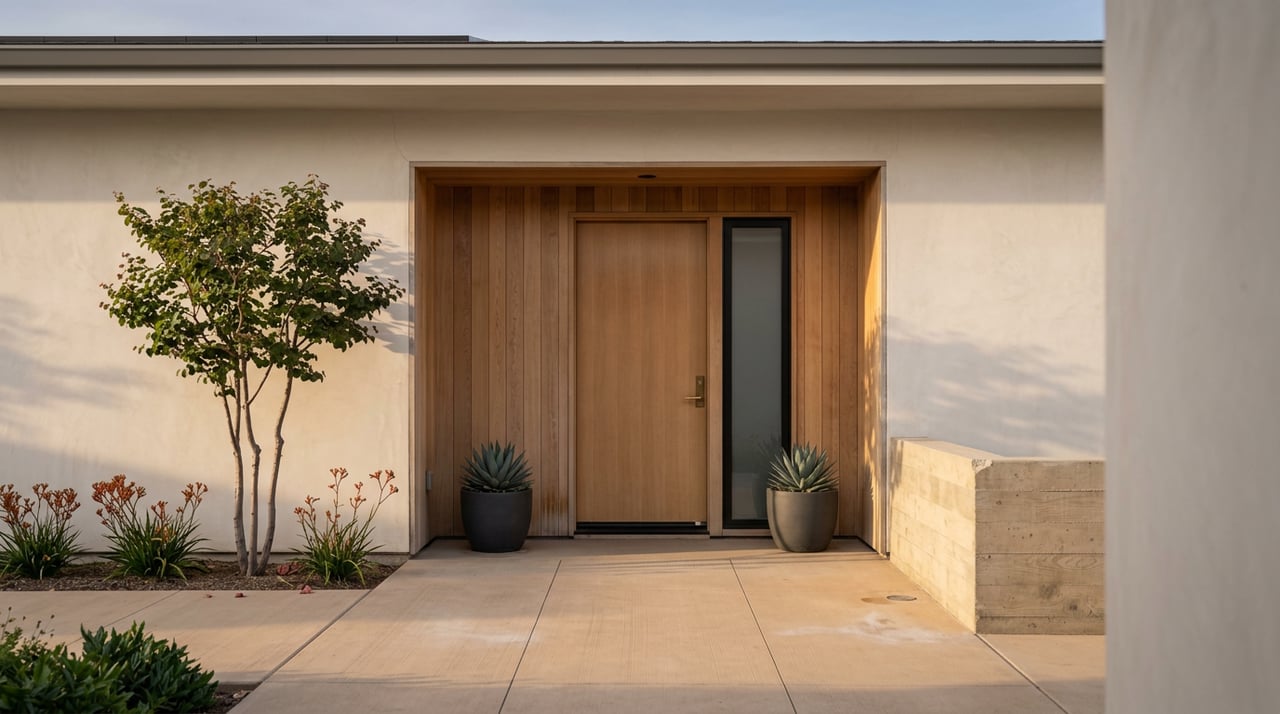
Stand on Kentwood Court on a clear afternoon and you will hear jets. Stand two blocks away on Dunfield Avenue, closer to the runway, and you may hear more of them, or fewer, depending on which way the wind is blowing that week. Neither block feels like a legal boundary. But one of them may sit inside a line that the county has drawn on a map, and the other may not, and that line, not the sound itself, is what shows up in your disclosure paperwork when you sell.
This is the part most sellers in Westchester get backwards. They assume that if their street feels loud, they must be "in the flight path," and if it feels quiet, they're clear. The actual boundary that matters for a transaction has almost nothing to do with what any one buyer hears standing in the driveway. It is a modeled annual average, redrawn periodically by Los Angeles World Airports, and right now it is being redrawn again.
The map and the mile are not the same thing
The 65 dBA Community Noise Equivalent Level, or CNEL, contour around LAX has held at roughly three square miles for years, even as the noisiest jet engines were phased out and the 70 dB contour shrank from about 2.6 square miles down to roughly one, according to the noise analysis prepared for the Westchester-Playa del Rey Community Plan Update. That stability at 65 CNEL matters because California law hooks its disclosure requirement to a boundary like this one, not to a resident's subjective sense of noise. If your address falls inside the mapped airport influence area, state law requires a specific disclosure. If it doesn't, the requirement doesn't apply, regardless of how many planes you counted last Tuesday.
The wrinkle is that this boundary isn't fixed in the way a property line is fixed. Los Angeles World Airports is in the middle of updating its official noise exposure map right now, a process required periodically under federal aviation rules. The agency held its first round of public open houses on this update in October 2025 at the LAX Flight Path Museum and the Jesse Owens Community Regional Park Gymnasium, and additional sessions were slated for early 2026. The update is meant to forecast noise exposure for both 2026 and 2031, which means the boundary a seller is working with today reflects a snapshot, not a permanent fact. The most recent quarterly contour data posted to the City of Los Angeles GIS system, updated in April 2026, reflects fourth-quarter 2025 flight operations. A home just outside the line this year is not guaranteed to stay there.
What the disclosure actually requires, and what it doesn't
California law defines an "airport influence area" as the zone where current or future noise, overflight, or safety factors from an airport may significantly affect land use, and requires that a seller's Natural Hazard Disclosure include a specific statutory notice if the property falls inside it. This isn't a matter of agent discretion. The disclosure company doing the natural hazard report is the one that checks the parcel against the current airport influence map and determines whether the notice is triggered.
Here's the part that catches people off guard: once that statutory notice is properly delivered, California law treats the seller and the agent as having satisfied their disclosure duty on this specific issue. It closes the loop rather than opening a new one. That protects a seller who complies, but it also means a buyer who skims past the natural hazard packet without reading it carries some of that risk forward themselves. A seller in Westchester who assumes "everyone already knows about the airport" and skips a careful read of their own NHD report is taking on the kind of avoidable risk that a good pre-listing review is built to catch.
The contour line is a legal fact before it's an audible one. Sellers who treat it that way have fewer surprises at the closing table.
The paperwork left behind by an older program
There's a second layer to this that shows up less in the disclosure form and more in the condition of the house itself. Starting in 1997, Los Angeles World Airports ran a voluntary Residential Sound Insulation Program for homes inside the 65 dB CNEL contour, beginning with the highest-impact areas of Westchester and Playa del Rey. LAWA opened a community office in Westchester to support the program, which stayed open to the public until September 2009. By the time the original program wrapped up in 2014, it had sound insulated more than 7,300 residential units across the City of Los Angeles near LAX, retrofitting doors, windows, and ventilation systems at no cost to the homeowner.
That program closed, but it didn't close the need. LAWA has since reopened a new phase of the Residential Sound Insulation Program aimed at previously untreated units in eligible areas of the city and El Segundo, a multi-year effort the agency has described as running roughly seven years from its restart. For a seller, this means two things worth checking before listing. First, if your home was treated under the original program, that upgraded glazing and ventilation is a real, verifiable improvement, not just a selling point, and it's worth having the paperwork on hand. Second, if your home was never treated and sits in an eligible zone, it may still qualify under the current phase, which is worth confirming before a buyer's inspector raises the question first.
Why two nearby streets can tell different stories
The contour line is drawn from annual average operations, which is exactly why it can miss what a specific week feels like on a specific block. LAWA's own monitoring shows that westerly departures, planes taking off toward the ocean, account for more than 95 percent of all departures from LAX because of prevailing wind patterns. Most of the time, that sends departing traffic away from residential streets. But LAWA also tracks what it calls "early turns," when a departing aircraft banks before reaching the shoreline and ends up over neighborhoods to the north or south, including Westchester, Playa del Rey, and El Segundo. Early turns make up less than one percent of departures, and LAWA has worked with the FAA since the 1980s through an Early Turn Notification Program to keep that number low. Go-arounds, where an aircraft aborts a landing and climbs back out, can do something similar, occasionally routing over the same communities depending on which direction the aircraft turns.
None of this shows up as a change in the annual CNEL average. It shows up as an occasional, disruptive event on an otherwise quiet street. This is the piece a median price or a single noise map can't capture: two homes with nearly identical annual exposure numbers can have very different lived experiences depending on how often their particular block catches an early turn or a go-around, and that variance is often known to neighbors long before it's known to a buyer relying on a map.
Before you list
A few concrete steps make this manageable rather than alarming:
- Ask your natural hazard disclosure provider directly whether your parcel currently falls inside the mapped airport influence area, rather than assuming based on how the block sounds
- Pull any records showing your home was treated under LAWA's original Residential Sound Insulation Program, since documented upgraded windows and doors are a verifiable asset, not just an amenity claim
- If your home was never treated, check current eligibility under the new RSI phase before a buyer's inspector brings it up first
- Understand that the noise exposure map is being actively updated through 2026, so the boundary that applied when you bought may not be identical to the one that applies when you sell
A few common questions
Does every Westchester home require an airport disclosure? No. The requirement is tied to whether a specific parcel falls inside the mapped airport influence area, which your natural hazard disclosure provider determines directly, not to the neighborhood name alone.
If my home already has the disclosure, am I done? For that specific issue, generally yes. California law treats proper delivery of the statutory notice as satisfying the seller's disclosure duty on airport proximity. It doesn't eliminate the value of walking a buyer through what the notice actually means, which is where a knowledgeable agent earns their keep.
Can I still get free soundproofing if my home hasn't been treated? Possibly. LAWA reopened its Residential Sound Insulation Program for previously untreated eligible units in Los Angeles and El Segundo, and eligibility is worth confirming directly with the program before you list, since a completed retrofit can be a meaningful selling point.
Will the new noise exposure map change anything for a sale happening this year? It could. LAWA's Part 150 update is actively forecasting exposure for 2026 and 2031, and quarterly contour data is already being refreshed. A parcel's status is worth reconfirming close to your listing date rather than relying on what applied when you purchased.
Selling a home near LAX isn't a liability to hide from. It's a set of specific facts that need to be handled correctly, the same way you'd handle any other disclosure. Knowing which line your address actually sits on, and what paperwork follows from it, is the difference between a smooth escrow and a late surprise.
If you're weighing a sale in Westchester and want a clear read on where your specific address stands, Zacha Homes can help you find out what your home is worth.